Everyone wants you to be cautious and pragmatic. But nobody wants ordinary.
That's the paradox at the heart of running a company. Investors want you to hit ambitious targets and experience exponential growth and market dominance. Their focus can change overnight, from scale at all costs to profitability first. Customers want you to solve their problems perfectly, immediately, and cheaply. Your teams want to build amazing things, feel like they're winning, with an unlimited budget and not having to work 24/7. And in the middle of all this, here you stand. You want to make sure the company survives, thrives, and doesn't lose its best people in the process.
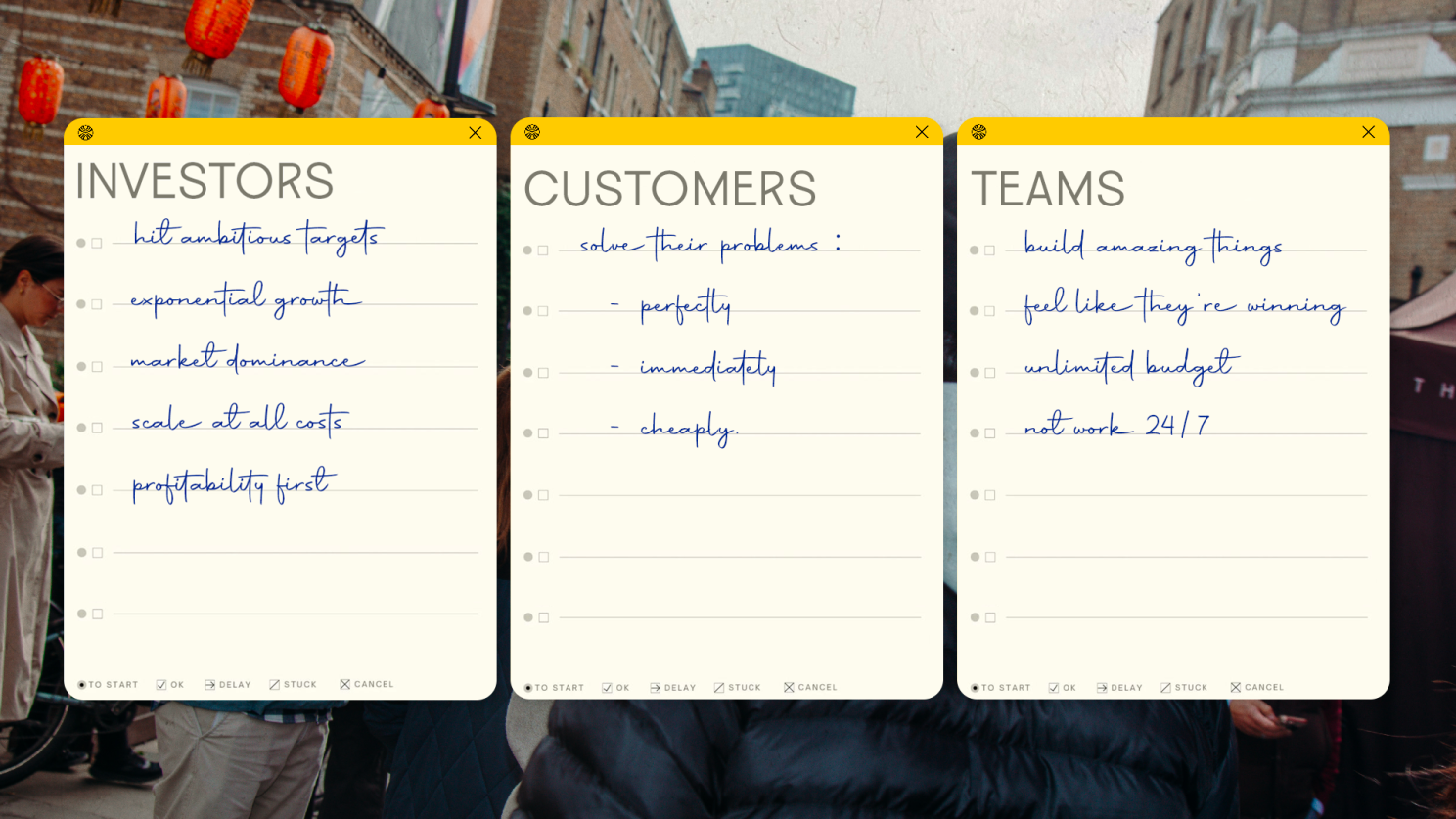
Those desires are unfortunately not compatible. Not all at once, anyway. And managing the gap between all these competing expectations is probably the hardest part of being a CEO.
Expectations vs. reality
The operational reality of running a company is rarely as exciting as its narrative. Everyone is interested in the results and what you can achieve, but rarely in how things get done. “It's the journey, not the destination”. Well, not really.
Let’s say you’re changing your pricing and packaging. On paper, it sounds simple. In reality, it’s a strategic decision that will likely impact all your teams and require weeks of work. It means interviewing dozens of clients to validate your hypothesis, adapt your products, adjust your product marketing, train your sales team, rebuild your internal tooling process, get your customer success team aligned with the new goals. It’s a single bullet point on a slide, yet it’s one of your most complicated projects of the year.
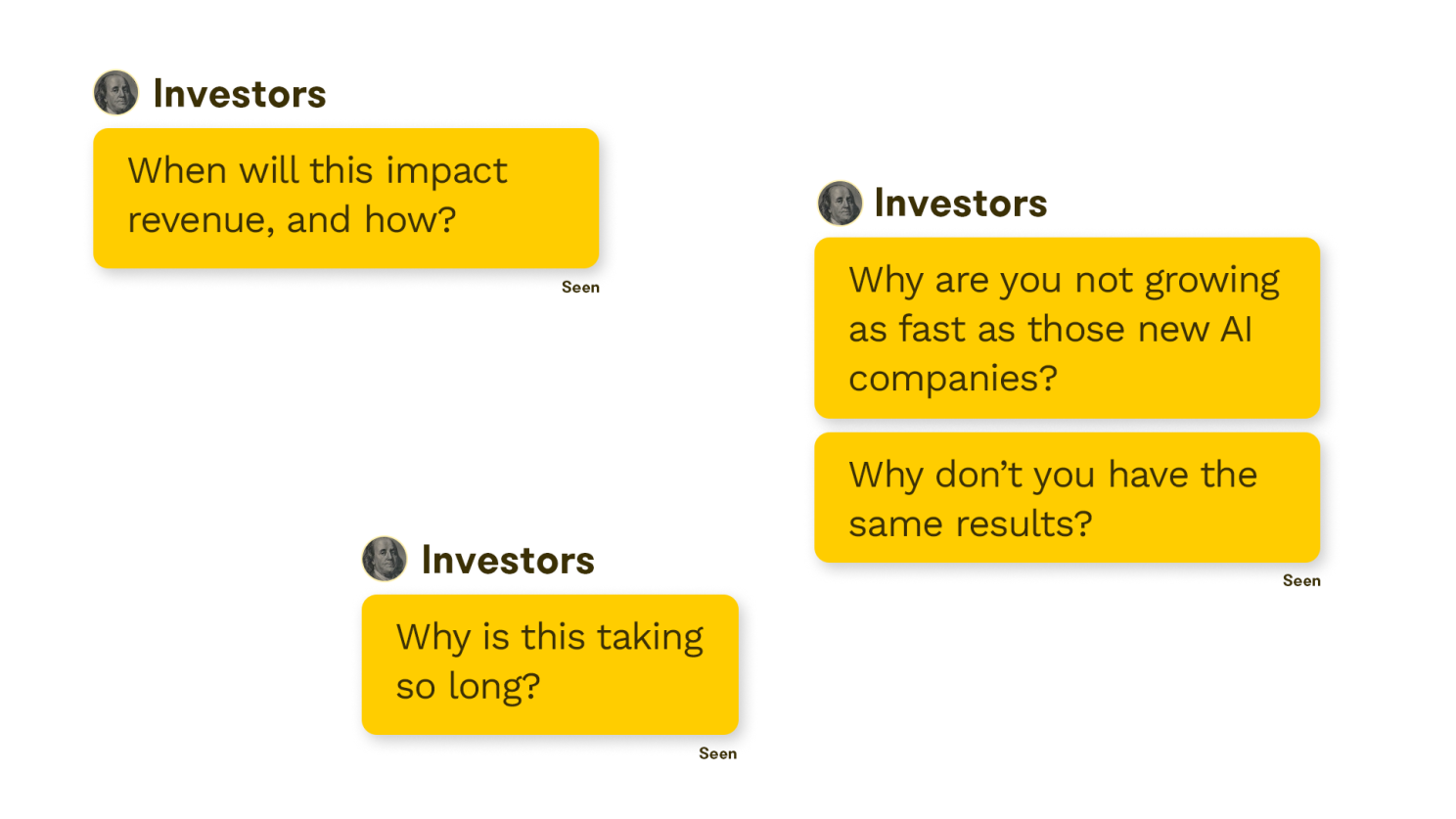
The complexity of the task will necessarily bring uncertainty on the timing. And when investors ask “When will this impact revenue, and how?”, they don’t care about the intricate details on how it will be done. The only important thing is that it has to be done as quickly as possible.
Expectations quickly become unrealistic when we don’t share the same relationship with time. In a world that is always accelerating, this discussion is harder and harder to have. Why are you not growing as fast as those new AI companies? Why don’t you have the same results? Why is this taking so long?
And it's the same thing for all the stakeholders. It inevitably brings tension as most of the time, it’s impossible to know exactly what can be done in a specific time.
In 2025, I decided to rethink Welcome to the Jungle’s foundations. What was interesting is that everybody agreed on the need to do it, from our teams to our investors, even our clients. Everyone wanted change. But to meet expectations, you can’t just be right on the diagnosis. You need to be right on the timeframe, or what people believe is a good timeframe. And they all see it in very different ways!
Love triangle
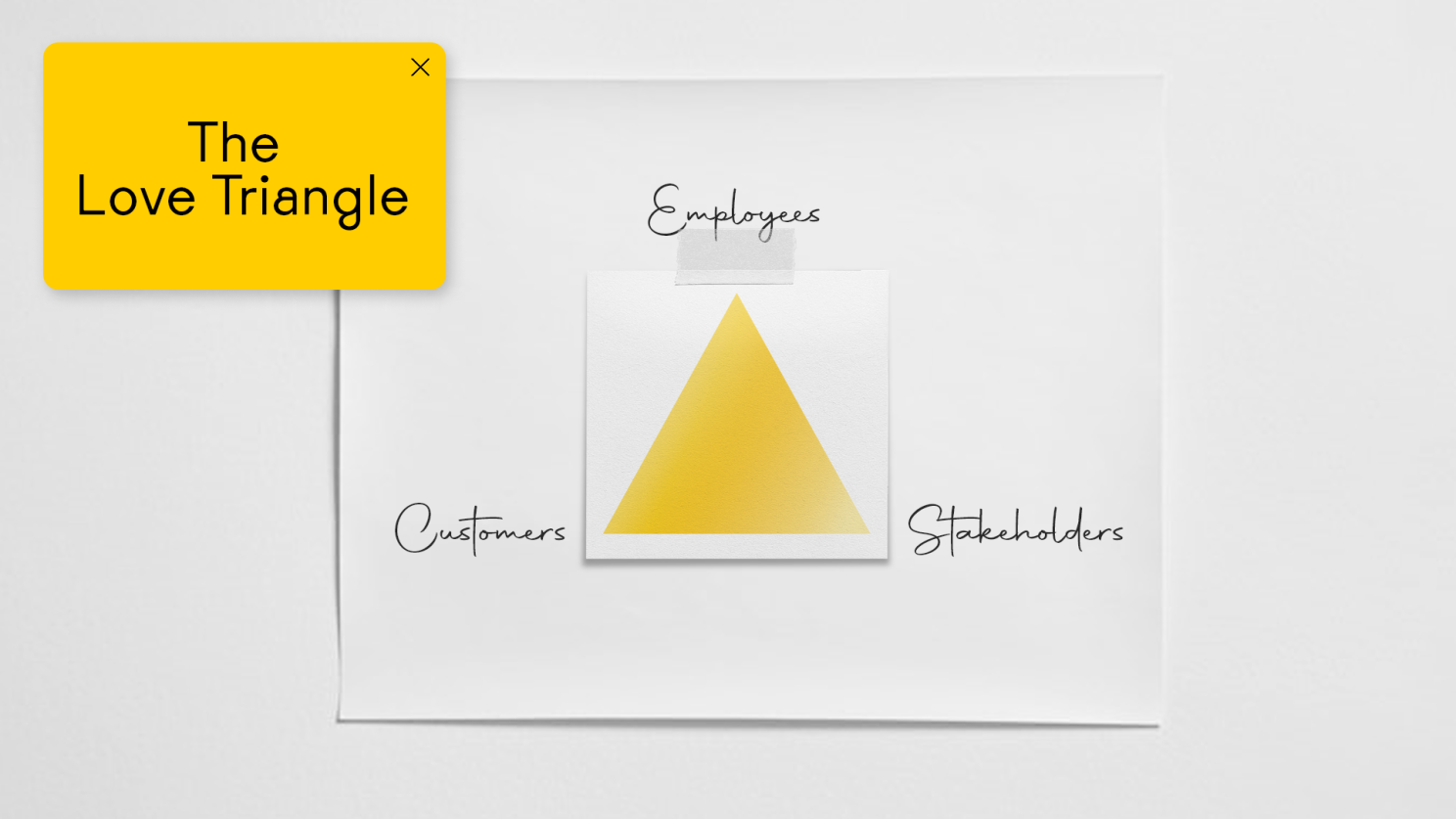
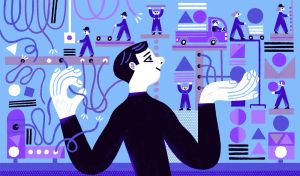
Every company operates within a triangle of three stakeholders with different interests: employees, shareholders, and customers. The bad news is that it’s impossible to satisfy all three at the same time, and one always gets less at some point. Expectations are different, and it makes your job as leader tricky as hell.
However, this is also what makes a CEO job so damn interesting. At all times, you need to understand which stakeholder you need to optimize for, for the greater good of the company. And you need to know if you’re comfortable with the trade-offs it requires. Possibly every year, or even every month or every week, you have to reassess what’s best, and rotate. This love triangle is never static.
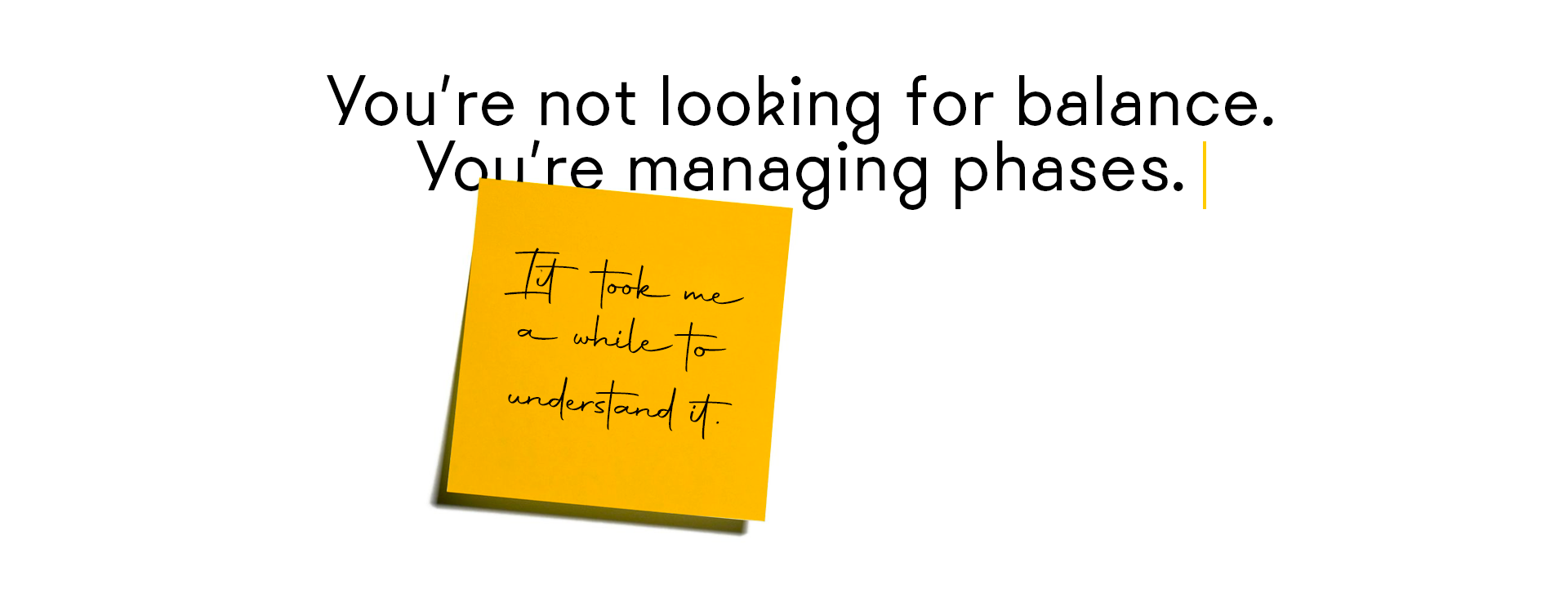
If you’re looking for balance, you will probably end up executing a soft, non-radical strategy that will fall short. If you’re always optimizing for the same stakeholder, doom will come eventually.
Let’s say you optimize entirely for customers. Your motto is "We'll serve them perfectly, at any cost." That allows growth and customer satisfaction. But the cost? Your employees and possibly your product. Employees get to work around the clock. They're burned out. They're leaving. The product starts to be a pot pourri of all customers’ requests, and can’t be maintained. The company starts to crumble from the inside.
If you optimize entirely for employees, you're building the best company to work for. Your people are happy, engaged, growing. But maybe your product isn't competitive. Maybe your customers aren't getting what they need. Maybe the business is failing. And when the business fails, people lose their jobs anyway.
And if you optimize entirely for shareholders, you're chasing short-term successes at all costs. It can be growth one day, and profitability the next day. You're cutting corners. You're pushing your people to the limit. You're making promises to customers you can't keep. Short-term gains, long-term collapse.
What’s at stake here is not finding the balance. It’s knowing when to dynamically shift. There are cycles and it requires a constant recalibration of expectations.
Understanding the phases, forgetting the balance
In 2025, I made the conscious decision to focus more on the clients and shareholders’ side of the triangle. The company needed it. We made difficult decisions and we focused on operational excellence. A lot of people left because of this choice, and it was a much harder year than what we would have ever wanted. That wasn’t easy, but it was necessary. It was clear what we needed to optimize for.
The nice thing about getting the phase right is that if you succeed, it paves the way for a great next phase. As Welcome to the Jungle stabilizes, customers will become more satisfied with our products and a growing business gives you more optionality for your people. You will be able to decide next when it’s the right time to start a more employee-focused phase, because you’d need that to grow and get the talent and expertise you need.
What proved paramount is transparency about those choices. You have to acknowledge which direction the scale is tilting, and explain it.
Power and peril of transparency
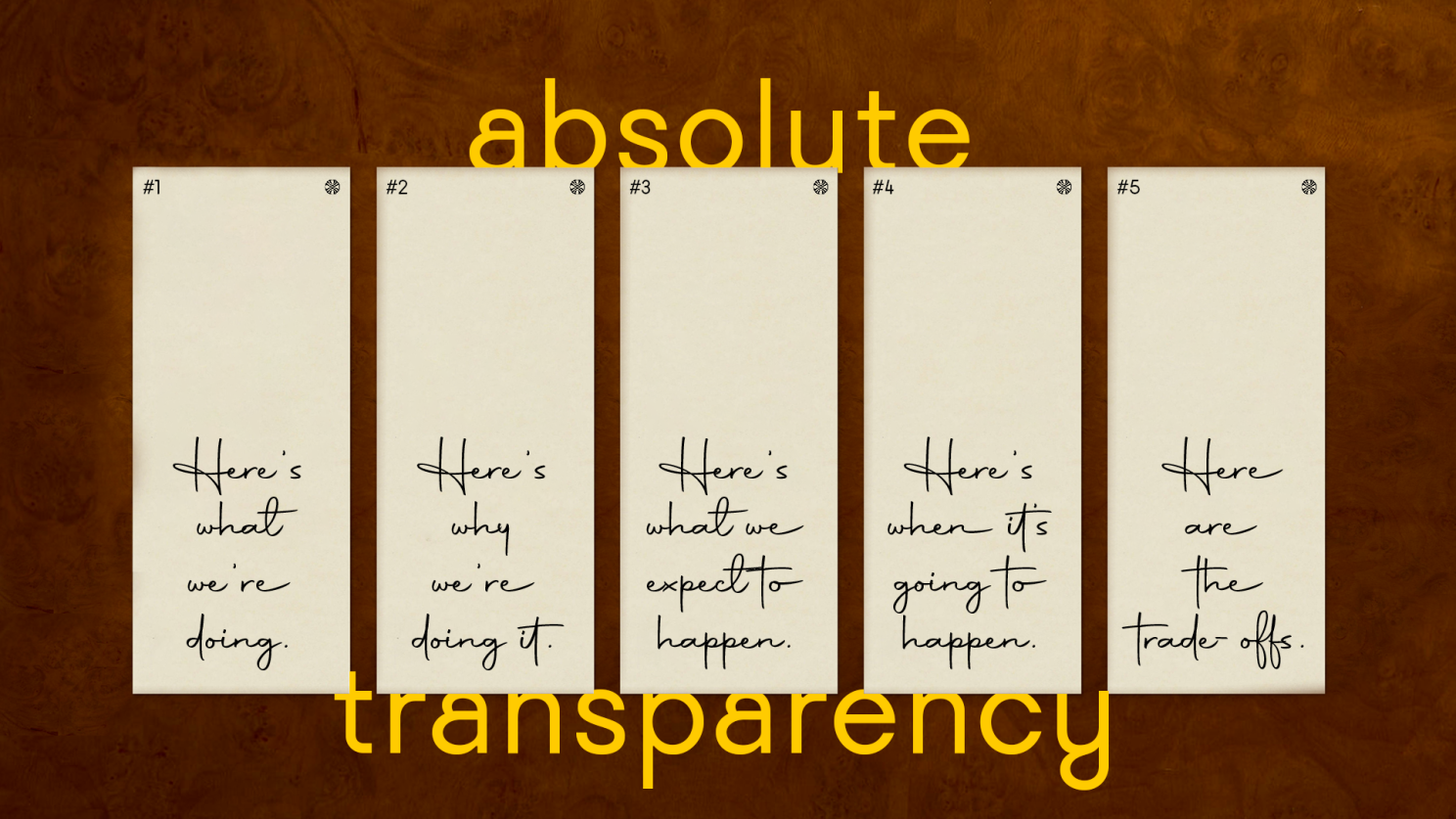
The best tool for managing expectations is absolute transparency. Not the kind that spills every detail into every meeting. The kind that says: Here's what we're doing. Here's why. Here's what we expect to happen and when. Here are the trade offs we’re making.
It can be tricky. When you lay out your expectations, people measure you against them. And if things take longer than you said, or if the impact is smaller, or if the direction shifts, people feel misled. As CEO, your job will definitely be on the line.
But it should be the right thing to do. If you’re making a trade-off between different expectations, you need to explain why and you need to be accountable for it. It forces you to cultivate a healthy dose of humility, as you should be willing to sometimes say "We were wrong about the timeline. Here's the new estimate. Here's what we learned."
It requires accepting that some of your stakeholders will be disappointed sometimes. And see if they have the humility as you do to understand this can happen.
Is patience still a thing?
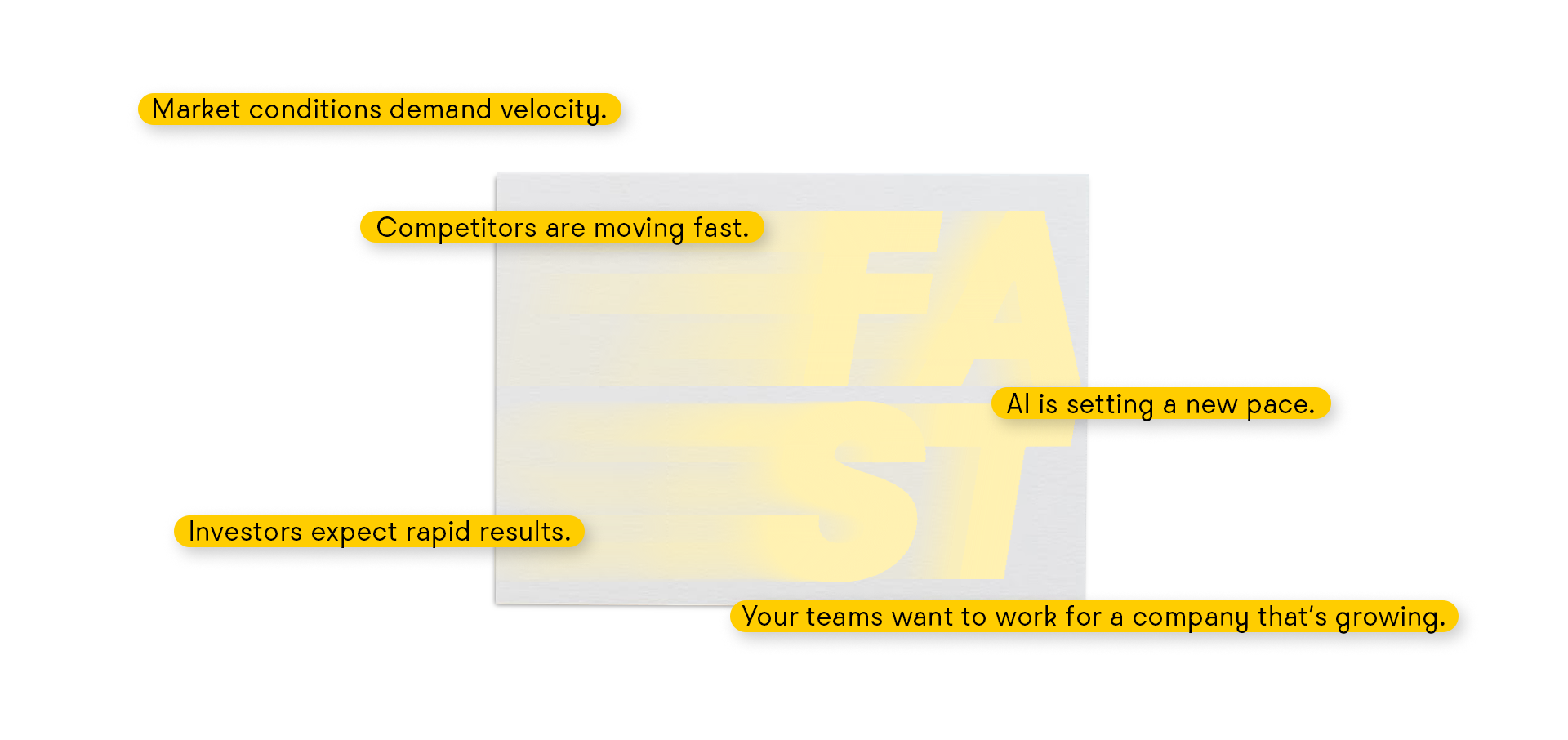
We all know meaningful change takes time. Real transformation takes time. Building something sustainable takes time. But everyone wants you to move fast. Market conditions demand velocity. AI is setting a new pace. Investors expect rapid results. Competitors are moving fast. Your teams want to work for a company that's growing.
I found myself exactly in this kind of situation when we rethought our fundamentals last year. We’re rebuilding our products from the ground up and that is taking time. Even when you're doing everything right, even when you have the best team and a clear vision, it still takes time.
Of course everyone wants to see something happen. "I need to see traction. I need to see impact. I need to know this is working." Damn, I do too!
But that pressure can be dangerous. Because it can push you to do something visible, something that looks good in the short-term, even if it doesn't actually solve the underlying problem. It's the difference between repainting a wall and rebuilding it. As a leader, you have to accept the consequences of doing the right thing on the right timeline. You have to be willing to take the hit, absorb the criticism, and trust that you're building something better. You have to believe in what you’re doing and you have to see the bigger picture. After all, “patience is a virtue”.
Will you fix the real problems?
Not all expectations are created equal. Some are addressing real problems. Others are just symptoms and you need to know which is what.
There are cosmetic issues: small problems that need decisions, that have human implications, but that you can learn to delegate or manage incrementally. These are the things where you should set expectations for your teams, because they're manageable.
And then there are structural problems. These are the ones that can't be avoided. They require deep work. They take time. They hurt. And they're the ones where everyone, your teams, your customers, your investors, will look back and say "Why didn't you fix this earlier?"
The structural problems are the ones that keep me up at night. Because solving them is hard. It requires making decisions that are unpopular. It requires asking people to bear short-term pain for long-term gain.
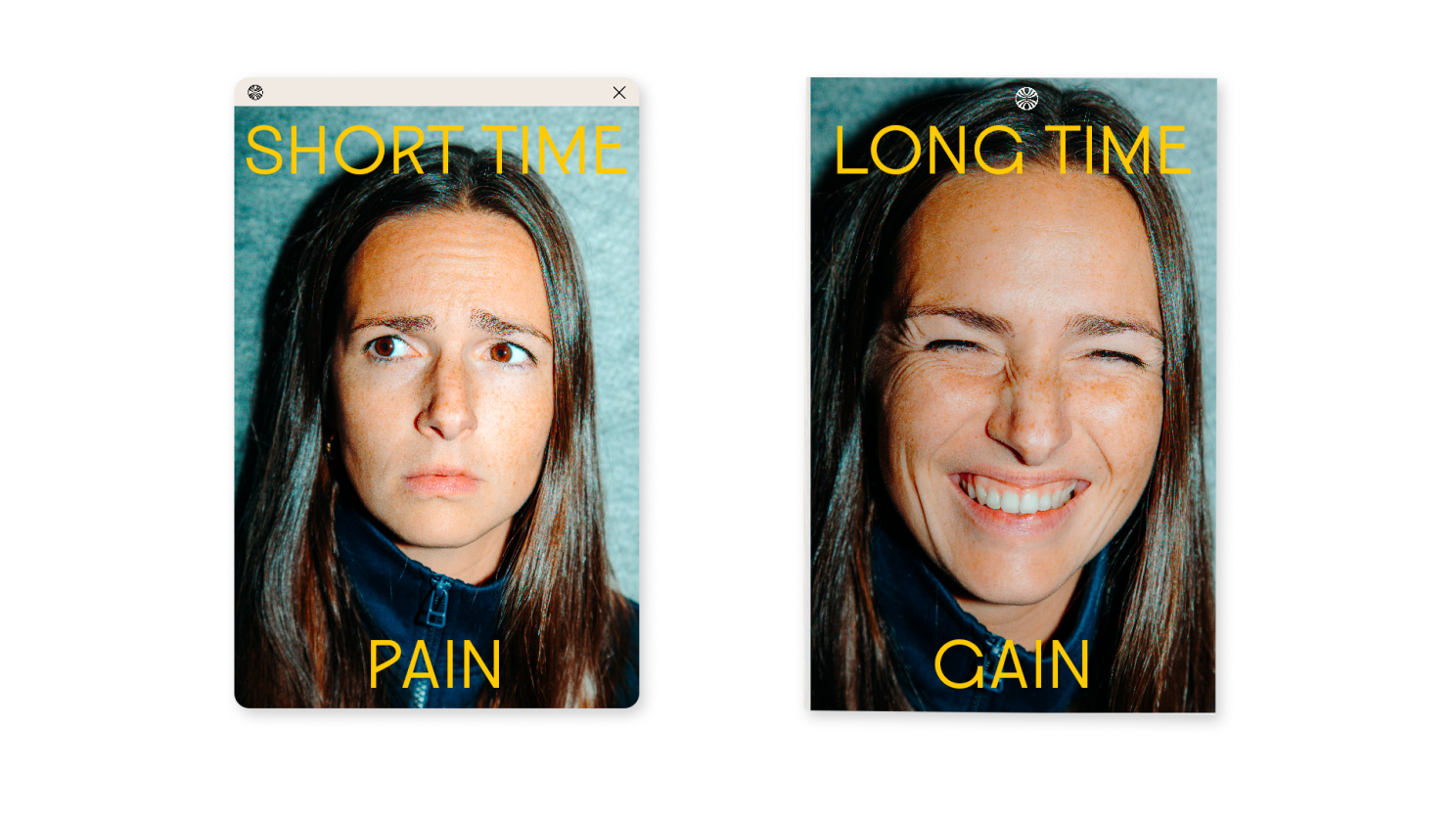
And here's the kicker. Sometimes, the benefit of solving structural problems might not come until after you're gone. You might not be the one who gets to celebrate the result of the difficult decision you made today. That's a hard pill to swallow as a leader but that’s part of the game.
Walking the talk
So how do you navigate this love triangle? How do you manage expectations when everyone wants something different and the timeline is never as clear as anyone wants? How do you find the strength to do what’s necessary, when it can cost you your job?
I guess this is what makes the CEO job so interesting (and also what gives you a few sleepless nights). There is value in accepting that you will never be done managing expectations. You’ll never be perfectly “balanced”. You’re always on the tightrope, always adjusting, correcting the course.
And sometimes, you make good decisions and the three interests will converge more than they diverge. When it happens, this is the best feeling in the world.