Research Scientist — Frontier Physical AI
Join our team as a Research Scientist in Frontier Physical AI. You'll work on complex scientific data and representation learning, focusing on building foundation models for scientific signals, starting with the brain. This role requires architecture-level thinking, understanding failures, developing pre-training strategies, and bridging gaps between signals. You should have a PhD in a related field, strong proficiency in PyTorch, and experience handling challenging data. Bonus skills include experience with multimodal alignment and a history of publications in top-tier venues.
Suggested summary by Welcome to the Jungle
Permanent contract
Paris
A few days at home
Salary: Not specified
Experience: > 4 years
Education: PhD or more
Key missions
Concevoir et développer des méthodes adaptées aux signaux physiques, en particulier pour les petits échantillons et les structures irrégulières.
Posséder des expériences de bout en bout, de l'hypothèse au déploiement, et contribuer à l'ingénierie des pipelines et de l'infrastructure.
Travailler en collaboration avec une petite équipe pour explorer des problèmes scientifiques complexes et trouver des solutions innovantes.

Questions and answers about the job
The position
Job description
The Challenge: Complex Scientific Data & Representation Learning
We’re building foundation models for scientific signals, starting with the brain (EEG, fMRI, ultrasound) and aim to extend the same approaches to other complex domains where data is scarce and difficult to collect.
We finished as silver medalists at the NeurIPS 2025 EEG challenge and have had recent papers accepted to CVPR and submitted to ICML. This feels like we’re just beginning to find our footing. For every problem we solve, we seem to stumble upon three more fundamental questions we can’t answer yet. We’re still trying to figure out the basics of how these signals behave, and we find that uncertainty is much more motivating than the ‘solved’ parts.
What the Work Looks Like
This role is about architecture-level thinking:
Understanding Failures
- Why do standard methods fail on irregular, noisy, or scarce data? How can we adapt?
Pre-Training Strategy
- Develop methods tailored to physical signals (small samples, irregular structures).
Multimodal Alignment
- Bridge gaps between signals and find the right inductive biases for physical systems.
End-to-End Ownership
- If the core is scientific exploration (experimental and evaluation design), note that as a member of a small team, you’ll own experiments from hypothesis to deployment and contribute to engineering (pipelines, infrastructure).
Preferred experience
Requirements
Education: PhD (preferred) in Machine Learning, Deep Learning, or a closely related quantitative field.
Technical Expertise: Strong proficiency in PyTorch and experience running large models on GPU infrastructure
Data Experience: Hands-on experience handling challenging/complex data, including irregular time series, scientific signals, and geometric or physical structures.
The “Data-First” Mindset: A practical approach to research where you prioritise analysing raw signals and data quality over just monitoring loss curves.
Navigating Ambiguity: Ability to thrive in an environment with open-ended problems and the communication skills to make complex research approachable for non-scientific teams.
Fluent English (the team speaks English in the day-to-day)
Bonus Skills
Specialised Deep Learning: Experience with multimodal alignment or large-scale pre-training and foundation models.
Advanced Domains: Specific knowledge in geometric deep learning or physical signal processing.
Academic Track Record: A history of publications in top-tier venues such as NeurIPS, ICML, or equivalent conferences.
Unconventional Backgrounds: Experience working with “exotic” signals or unique data systems that demonstrate deep thinking and adaptability.
Beyond Technical Skills:
While technical excellence is critical, we place equal importance on how we work together. We believe the best teams are built on:
Integrity & Respect
- We are striving for honesty, kindness, and fairness. We value people who treat others with dignity and foster an environment where everyone feels heard.
Open Communication & Humility
- Great ideas come from collaboration. We look for teammates who listen actively, communicate clearly, and approach challenges with self-awareness and humility.
Psychological Safety & Camaraderie
- We strive to create a space where people feel safe to take risks, ask questions, and grow.
Recruitment process
Application review
Introductory call with Paul (Head of Talent Acquisition) – 30 min
Deep dive on AI research – 45 min
Behavioural interview with Paul – 30 min
Half-day onsite : Research talk + pair coding + pair system design session.
Want to know more?
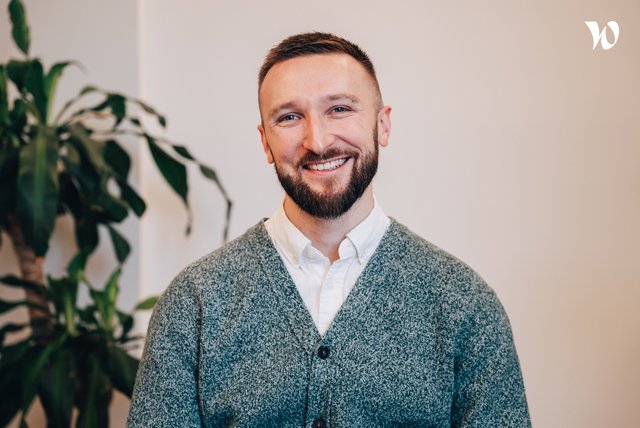
Rencontrez Paul, Head of Talent Acquisition
These job openings might interest you!
These companies are also recruiting for the position of “Basic and Applied Research”.
Member of technical staff - Research - Model
H CompanyPermanent contractParisNo remote workSoftware, Artificial Intelligence / Machine Learning75 employeesProtein and Vector Engineering Scientist
Whitelab GenomicsPermanent contractParisA few days at homeArtificial Intelligence / Machine Learning, Health41 employees