
Technology-driven platform improving access to non-emergency medical transportation
- Software
- San Antonio
- Between 50 and 250 employees
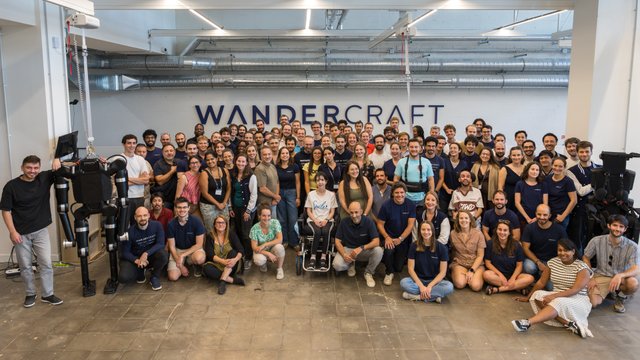

Exosquelettes et robots pour réhabilitation et industrie.

Open and composable observability platform.
Open and composable observability platform.
Open and composable observability platform.

Logistics system for equitable goods movement.

Autonomous vehicle technology.
Autonomous vehicle technology.

Platform for writers and podcasters to pursue curiosity and earn money.

Syndicated loan and private credit market transformation.

Security and systems management platform.

Modern savings platform for important life milestones.

Compassionate kidney care services.

AI software for detecting pathologies in dental imaging.

Cloud-based digital workflows for enterprises.
Cloud-based digital workflows for enterprises.
Cloud-based digital workflows for enterprises.

AI data research lab for impactful problem-solving.

Error tracking and app monitoring software for developer teams.

Credit and savings-building platform.

ERP & CRM solutions for project-driven organizations.
Technology-driven platform improving access to non-emergency medical transportation

Profitable Fintech Unicorn - Lending Platform

The autonomous B2C CRM

Design tool for the professional services industry

High-quality human-powered data at scale

Enterprise app that empowers frontline workers

Work from anywhere, and make the web a better place for everyone, everywhere.

Profitable health tech, providing convenient access to prescription medication in multiple countries

AI executive assistant
The technology sector in the United States is a major driver of economic growth, innovation, and employment. As one of the world’s leading hubs for tech companies and startups, the U.S. offers a vast array of job opportunities across various levels of expertise and specializations. From Silicon Valley to emerging tech hubs in cities like Austin, Boston, and Seattle, the demand for skilled tech professionals continues to rise. Here’s an overview of some prevalent tech jobs in the U.S.:
Software developers and engineers are at the heart of creating computer programs, mobile applications, and systems software. They use programming languages to write code, develop software, and maintain and improve existing applications.
Data scientists analyze and interpret complex data to help companies make informed decisions. They use statistical methods, machine learning algorithms, and data analysis to uncover trends and patterns.
With the increasing threat of cyberattacks, cybersecurity specialists are crucial in protecting an organization’s computer systems and networks. They monitor systems for breaches, investigate security incidents, and implement security measures.
Cloud engineers specialize in the design, implementation, and maintenance of cloud-based systems. They work with cloud service providers like Amazon Web Services (AWS), Microsoft Azure, and Google Cloud Platform to deploy and manage cloud applications and infrastructure.
User Experience (UX) and User Interface (UI) Designers play a critical role in designing the look and feel of websites and applications. They focus on optimizing user interactions and ensuring a seamless and engaging user experience.
DevOps engineers bridge the gap between software development and IT operations. They work to streamline the software development process through continuous integration and delivery, aiming to improve the speed, quality, and reliability of software deployments.
AI/ML engineers develop algorithms and models to enable machines to learn and make decisions. They work on applications ranging from voice recognition systems to predictive analytics.
Network and systems administrators are responsible for the daily operation of computer networks. They organize, install, and support an organization’s computer systems, including local area networks (LANs), wide area networks (WANs), network segments, and other data communication systems.
IT project managers plan, initiate, and oversee information technology projects. They coordinate the efforts of team members and stakeholders, manage budgets, and ensure that projects meet their objectives on time.
Emerging technologies such as blockchain, quantum computing, and augmented/virtual reality (AR/VR) are creating new job roles, including blockchain developers, quantum computing scientists, and AR/VR engineers.
The tech job market in the U.S. is characterized by its rapid pace of innovation and change. Continuous learning and adaptation are key for professionals looking to stay ahead. With the ongoing digital transformation across all industries, the demand for tech talent is expected to grow, offering numerous opportunities for career advancement and specialization. Remote and flexible working arrangements are also becoming more common in the tech sector, expanding job opportunities across the country and beyond.