ML Engineer Intern (Computer Vision)
Prácticas(de 4 a 6 meses)
Le Kremlin-Bicêtre
Unos días en casa
Salario: No especificado

Preguntas y respuestas sobre esta oferta
El puesto
Descripción del puesto
At Orakl Oncology, our wet lab generates a rich diversity of data — from high-throughput screening results to microscopy images and other forms of unstructured data. Our ambition is to scale this data production and centralize it into a robust, industry-grade data platform. Today, the microscopy images generated during our experiments are still underexploited, despite their potential to capture rich phenotypic signals related to tumor growth and drug response. Unlocking this information requires robust computer vision pipelines and careful evaluation of the predictive value of imaging features.
We are looking for a Machine Learning Engineer Intern (Computer Vision) to help design, build, and optimize imaging workflows that power our wet-lab operations and predictive engine. In this role, you’ll work at the intersection of biology and machine learning, contributing directly to projects with immediate impact on our mission to discover new cancer treatments.
A central goal of the internship will be to answer a key scientific and product question: do the microscopy images generated in our lab provide predictive power beyond existing modalities such as omics, clinical, and experimental data?
Key Responsibilities
Integrate imaging data into existing experimental and ML workflows, ensuring smooth ingestion, preprocessing, and alignment with current datasets and pipelines.
Develop computer vision feature extraction pipelines to generate predictive representations from images (e.g., segmentation, morphological descriptors, embeddings, and learned features).
Quantify the added predictive value of imaging features beyond existing modalities (screening, clinical, omics), using rigorous evaluation frameworks, ablation studies, and appropriate performance metrics.
Perform model debugging and error analysis to understand failure modes, improve robustness, and validate biological/experimental relevance of extracted features.
Requisitos
Minimum Qualifications
BSc, MSc, MEng, or equivalent degree in statistics, machine learning, data science, or a related field.
Strong computer vision + deep learning fundamentals (segmentation, object detection, classification, metric learning/embeddings)
Prior professional experience using Python, with familiarity with modern development tools and environments (GitHub, AWS/GCP).
Hands-on, curious, and autonomous, with the ability to navigate fast-paced and ambiguous environments.
Genuine interest in the intersection of data and biology.
Proficiency in English.
Preferred Qualifications
Experience with data pipelines, ETL processes, or workflow orchestration frameworks (Airflow, Prefect, or similar).
Proficiency with data visualization or dashboarding tools (e.g., matplotlib, Plotly, Streamlit, Dash).
Prior exposure to biological, experimental, or multimodal data.
Proceso de selección
HR Call (15 minutes) – An initial conversation to better understand your background, experiences, and motivations.
Technical Interview (45 minutes) – A deep dive into your technical skills and hands-on expertise relevant to the role.
On-site Interview – As the final step of our recruitment process, you will visit our office and lab, and work on a concrete case study combining experimental imaging data and computer vision.
¿Quieres saber más?
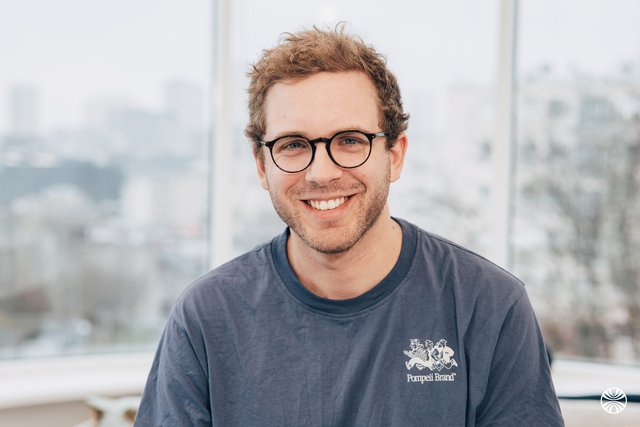
Rencontrez Gustave, CTO
Rencontrez Fanny, Co-founder
¡Estas ofertas de trabajo te pueden interesar!
Estas empresas también contratan para el puesto de "{profesión}".
Stage – Business Intelligence (H/F) - Durée 6 mois - Basé à Paris 14ème
EchosensPrácticasParisSin trabajo a distanciaSoftware, Inteligencia artificial/Aprendizaje automático400 empleadosData Analyst Intern
JokoPrácticasParisUnos días en casaAplicaciones móviles, Inteligencia artificial/Aprendizaje automático88 empleadosDeep Learning Engineer Intern
ImplicityPrácticasParisUnos días en casaSalario: ≥ 1,2K € por mesSoftware, Inteligencia artificial/Aprendizaje automático100 empleadosJunior Data Scientist (6-month Internship) 2025-2026
KayrrosPrácticasParisUnos días en casaInteligencia artificial/Aprendizaje automático, Medio ambiente/Desarrollo sostenible96 empleados